How We Save Money in 2026
In this article we will explore how we can save money in the grocery store and beyond
By Costy Team ·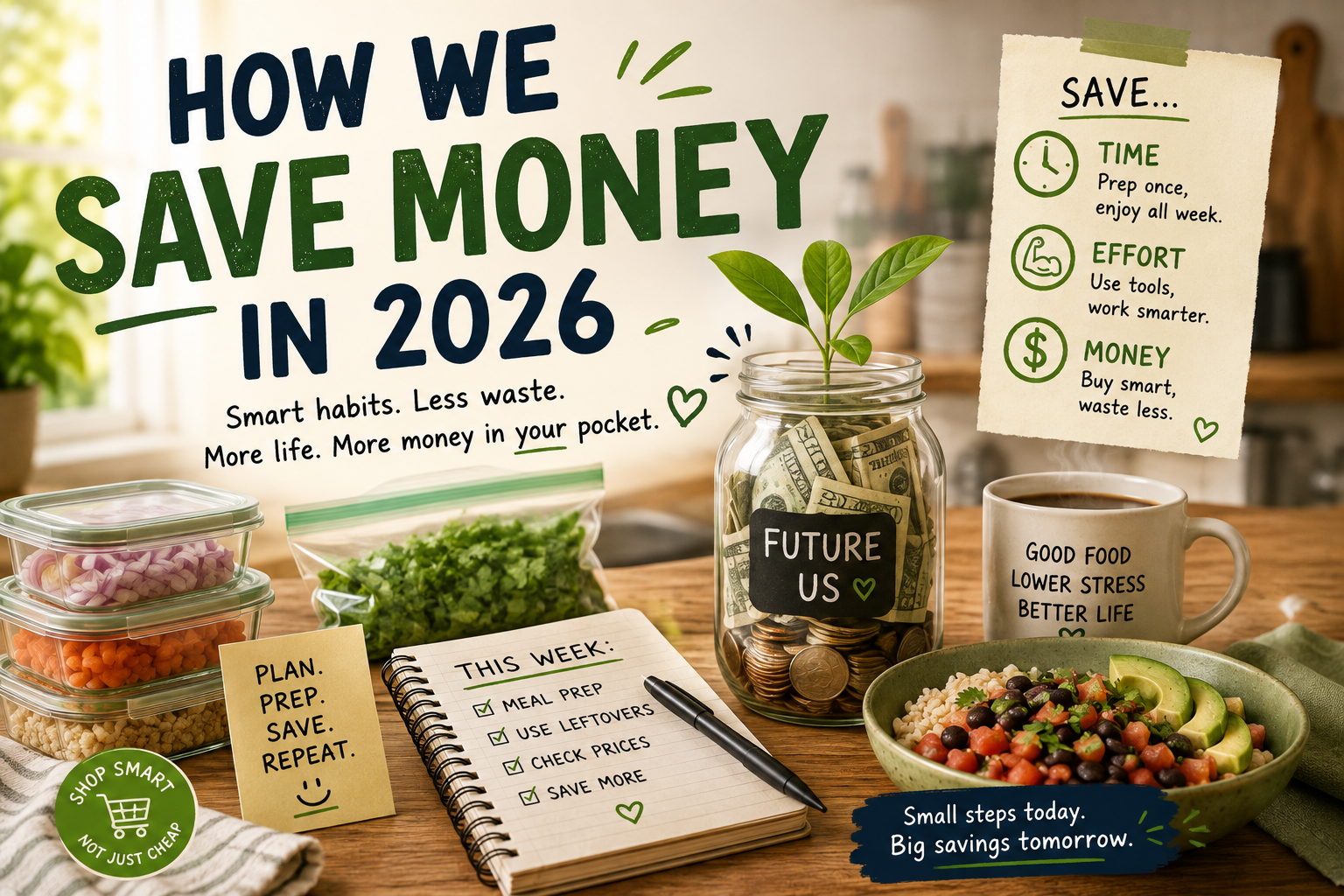
How We Save Money in 2026
Saving money in 2026 feels a little different.
We're dealing with an unusual combination of expensive energy, persistent grocery inflation, geopolitical disruptions, tariffs, and a labor market being reshaped by AI and automation. None of these things mean financial doom is inevitable, but together they make one thing clear:
**Keeping more of the money you already earn matters.**
As of July 2026, U.S. grocery prices were still **2.7% higher than a year earlier**, while energy prices were up **14.7%**. Meanwhile, shipping through the Strait of Hormuz has been severely disrupted by the Iran conflict, creating additional uncertainty around global energy supplies.
AI is also changing how companies hire and organize their workforces. There have been real AI-associated layoffs and reductions in entry-level hiring, although the evidence does **not** support blaming every recent layoff on AI alone.
So rather than attempting to predict the global economy from the kitchen table, we're going to focus on something considerably more controllable:
**our own kitchen table.**
The goal isn't to become a monk who considers buying a coffee an act of financial treason. It's to reduce waste, unnecessary effort, and spending that doesn't actually improve your life.
The Three Things We're Trying to Save
We collected some practical techniques that can help conserve three resources:
- **Money**
- **Time**
- **Effort**
They're more connected than they first appear.
A meal that's inexpensive but takes two hours every night may not be sustainable. A convenient meal that costs three times as much might not be sustainable either.
The sweet spot is a system where cooking becomes **cheap enough, easy enough, and fast enough that you actually keep doing it.**
Saving Time
Prep Once, Use It Repeatedly
Weekend food prep sounds painfully responsible, but it works.
If you know you'll use onions several times during the week, chopping a larger batch at once avoids repeatedly getting out the cutting board, knife, containers, and cleaning everything afterward.
The same principle works for:
- onions
- carrots
- celery
- herbs
- sauces
- marinades
- cooked grains
- portioned meat
You don't necessarily need to prepare complete meals.
Often the best approach is simply to prepare the **annoying parts** of future meals.
A few inexpensive deli containers in several sizes are excellent for this because they're stackable, easy to label, and make your refrigerator look suspiciously like you know what you're doing.
Become Friends With Your Freezer
The freezer is one of the most underused money-saving appliances in the kitchen.
Cooked food doesn't have to sit in the refrigerator waiting for you to forget it exists.
USDA recommends freezing leftovers within **3–4 days**, and fruits and vegetables that won't be eaten in time can often be frozen for later use in soups, stews and smoothies.
Rice is a particularly good candidate.
Make a larger batch, portion it, cool and store it promptly, and freeze what you won't use within the next few days. Frozen cooked rice reheats surprisingly well and can save you from repeatedly making tiny batches throughout the week.
USDA notes that freezing keeps food safe for extremely long periods at proper freezer temperatures, although texture and flavor eventually decline.
Not everything freezes beautifully—lettuce has submitted a formal objection—but almost any food can technically be frozen. The real question is whether you'll enjoy the result afterward.
Air Fryers Are More Than Dino-Nugget Machines
Air fryers are extremely useful for small, everyday cooking jobs.
They're good for things like:
- chicken
- roasted vegetables
- potatoes
- reheating leftovers
- crisping bread
- roasting garlic
- heating frozen foods
- drying small quantities of herbs
Their real advantage isn't magical cooking technology. It's convenience.
If using the air fryer means you're willing to cook something instead of ordering food because preheating the giant oven feels like launching a commercial bakery, then it has done its job.
Experiment.
Eventually you'll develop a mental database of:
380°F. Twelve minutes. Check halfway.
At that point you have achieved air-fryer enlightenment.
Saving Effort
Automate the Annoying Parts
There is no prize for performing every kitchen task manually.
An electric can opener, small food processor, spice grinder, immersion blender or vegetable chopper can eliminate repetitive work.
Traditional techniques are wonderful when you enjoy them.
If grinding spices in a mortar and pestle is relaxing, fantastic.
If it's Tuesday at 6:47 p.m. and everyone is hungry, the electric grinder has diplomatic immunity.
Spend your effort where it improves the food.
Automate the parts that merely consume energy.
Learn What Steps Actually Matter
Cooking gets dramatically easier once you understand **why** a recipe asks you to do something.
A chicken breast can be:
- roasted whole
- diced
- butterflied
- poached
- shredded
- grilled
- pressure cooked
Different meals require different preparation.
Once you understand the underlying techniques, you'll start recognizing which steps are essential and which are merely one author's preferred method.
That knowledge saves more time than buying another appliance.
It also makes recipes less intimidating because you're no longer blindly following instructions—you understand the system.
Good Tools Reduce Work
You don't need an expensive kitchen.
You do need tools that work.
A reasonably inexpensive knife that is properly maintained is considerably more pleasant than an expensive knife that has become roughly as sharp as a spoon.
Use an appropriate sharpener, honing system, or sharpening stone and learn proper technique. Don't improvise with random surfaces unless you actually know what you're doing; saving $12 on a sharpener stops looking clever after a trip to urgent care.
A stable cutting board matters too.
Plastic, wood and other food-safe cutting surfaces can all work. Current evidence around microplastic exposure continues to evolve, so broad claims that every plastic cutting board is dangerous are stronger than the evidence currently supports. FDA food-contact standards allow multiple materials when appropriately manufactured and used.
Whichever material you choose, get something stable.
A damp towel or nonslip mat underneath a cutting board can prevent it from performing an unexpected escape maneuver while you're holding a knife.
Clean as Part of the Process
A cluttered kitchen makes cooking feel harder than it actually is.
You don't need a showroom kitchen.
You need enough clear space that every task doesn't begin with:
First, relocate these seventeen mysterious objects.
Clean while something simmers.
Put ingredients away after using them.
Keep one section of counter intentionally empty.
Reducing friction makes you more likely to cook again tomorrow—and **consistency is where most of the savings happen.**
Saving Money
This is where the fun begins.
Or at least where the spreadsheet begins.
Find the Store That Is Actually Affordable for You
Don't assume a store is inexpensive because of its branding.
And don't assume another store is expensive because it looks nicer.
Look at **unit prices and actual receipts**.
Costy's own early receipt data has shown Aldi performing particularly well on average item prices compared with Walmart in the sample we've collected so far. However, we're still building the dataset, and different shopping baskets can make simple averages misleading.
The more useful question is:
**Where do the products you personally buy cost less?**
That might mean buying most groceries at one store while purchasing a few specific products somewhere else.
Dollar stores deserve the same scrutiny. A smaller package can have a lower sticker price while costing more **per ounce, pound, or unit**.
The tiny number on the shelf label is occasionally doing more financial analysis than the giant number above it.
Use it.
Waste Less Food
This may be one of the least glamorous but most powerful savings strategies in the entire article.
USDA estimates that an average American family of four loses roughly **$1,500 each year from uneaten food**.
That's not coupons.
That's not investment returns.
That's food you already paid for leaving your house without fulfilling its destiny.
Before shopping, check:
- your refrigerator
- your freezer
- your pantry
Build meals around what is likely to spoil first.
Freeze things you know you won't reach in time.
And occasionally have a meal we'll politely call:
**The Refrigerator Situation.**
Get More Out of Whole Ingredients
Whole chickens are a great example of thinking beyond a single meal.
Whether they're cheaper than individual cuts depends on local prices and sales, so compare the price per pound rather than assuming.
But when the economics work, a whole chicken can give you:
- breasts
- thighs
- drumsticks
- wings
- skin
- bones and scraps for stock
After breaking it down, bones and suitable trimmings can become stock.
Vegetable scraps such as onion ends, carrot trimmings and celery pieces can sometimes join them.
This doesn't mean every vegetable fragment belongs in stock. Some scraps create unpleasant flavors, and anything spoiled belongs in the trash or compost—not in the cauldron.
But turning usable scraps into another ingredient can reduce waste considerably.
It's essentially culinary recycling, except you get soup.
Dehydrate Food You Would Otherwise Lose
A dehydrator can be useful **if you'll actually use it**.
That last part is important.
Buying a $150 appliance to rescue $4 worth of parsley once every seven months is not technically saving money.
But if you garden, buy produce in bulk, or regularly have excess herbs and vegetables, dehydration can extend their usefulness.
Foods such as:
- herbs
- peppers
- mushrooms
- onions
- garlic
- tomatoes
can be dried and stored.
Some can also be ground into powders.
Mushroom powder in sauces, dried pepper powder in seasoning blends, or dehydrated herbs in soups can turn ingredients that might otherwise spoil into pantry staples.
Before buying a dehydrator, though, try using the low-temperature/dehydration mode on an oven or air fryer if yours supports it.
**Use the equipment you already own before buying equipment to save money.**
That rule alone could probably be an entire article.
Buy Durable Kitchenware, Not Kitchenware Forever
Stainless steel is excellent for many kitchen items.
It's durable, heat-resistant and difficult to break.
For things such as:
- mixing bowls
- cookware
- utensils
- storage containers
- measuring cups
it can last for decades.
But you don't need to purge your kitchen of ceramic and plastic tomorrow morning.
Ceramic plates work perfectly well.
Glass containers work perfectly well.
Properly manufactured food-safe plastics also have legitimate kitchen uses.
The better rule is:
**When something needs replacing, consider buying a durable version that you won't need to replace again soon.**
Replacing functional items solely for the purpose of saving money has a slight flaw:
you have to spend money.
Beans Are Financially Overpowered
Beans, peas and lentils are among the easiest ways to reduce the cost of meals without turning dinner into nutritional sadness.
USDA specifically recommends beans, peas and eggs as lower-cost protein choices.
Dried beans are usually inexpensive, but canned beans win heavily on convenience.
Rinse them if you want to reduce some of the sodium and throw them into:
- curries
- soups
- tacos
- salads
- rice bowls
- chili
- stews
And if you're comfortable cooking Indian food, legumes unlock an absurd amount of inexpensive food.
Think:
- dal
- rajma
- chana masala
- khichdi
- sambar
- chickpea curries
- lentil soups
A basic collection of spices costs something upfront, but most spices are used in small quantities across many meals.
You don't need 47 jars on day one.
Start with a handful of versatile spices and expand as you learn.
Beans have spent centuries quietly waiting for grocery inflation to reveal their true power.
Cook Flexible Meals, Not Perfect Meal Plans
One final strategy is to build a collection of meals that tolerate substitutions.
Instead of:
I require exactly eight ingredients or dinner has failed.
learn meal structures such as:
**Stir-fry**
protein + vegetables + sauce + rice
**Curry**
aromatics + spices + protein/legume + liquid + rice/bread
**Soup**
aromatics + vegetables + protein + stock
**Fried rice**
old rice + leftovers + egg/protein + seasoning
**Pasta**
pasta + sauce + vegetable/protein
This lets you cook based on what's cheap, what's already in the refrigerator, and what needs to be eaten.
That's much more useful than owning 300 recipes where every missing ingredient triggers another grocery trip.
The Bigger Idea
Saving money doesn't require squeezing every possible cent out of your life.
The goal isn't:
Never spend money.
The goal is:
**Spend deliberately and waste less.**
A good system reduces all three costs at once:
**money, time and effort.**
Preparing ingredients ahead saves time.
Freezing food reduces waste.
Good tools reduce effort.
Learning flexible cooking techniques lets you buy what's affordable.
Beans help because beans have apparently been preparing for this moment their entire existence.
And none of these strategies require you to completely reorganize your life.
Pick two or three.
See what actually works.
Then build from there.
Conclusion
There are economic forces in 2026 that individual households simply can't control. Grocery prices remain higher than a year ago, energy markets are unusually volatile, international trade routes are under pressure, and AI is creating legitimate uncertainty in parts of the labor market.
But personal spending doesn't have to become an exercise in panic.
Some of the best savings come from remarkably boring things:
using the freezer, maintaining your tools, eating the food you already bought, learning a handful of flexible recipes, comparing unit prices, and making inexpensive ingredients taste good.
None of these will single-handedly defeat inflation.
They can, however, make your household considerably more resilient to it.
And perhaps that's the more realistic goal.
**You don't have to control the economy. You just need to get better at controlling the little economy inside your own home.**